Summary
Concrete is a strong but porous base that absorbs spills and cracks over time. Epoxy is a resin coating applied over concrete to create a durable, sealed surface. It lasts 10–20 years, resists chemicals, reduces dust, and improves safety. Epoxy is a cost-effective, long-term industrial upgrade.
Maintaining cleanliness in an industrial area can be challenging, especially on the floors. Dust, spills, and stains are common. Over time, regular concrete starts to look tired and damaged. This is why many business owners already switched to epoxy flooring. This coating actually makes your floor more durable and appealing.
But before you opt for an industrial epoxy flooring contractor, here are a few things you need to know.
Let’s dive in!
What is Epoxy Flooring?
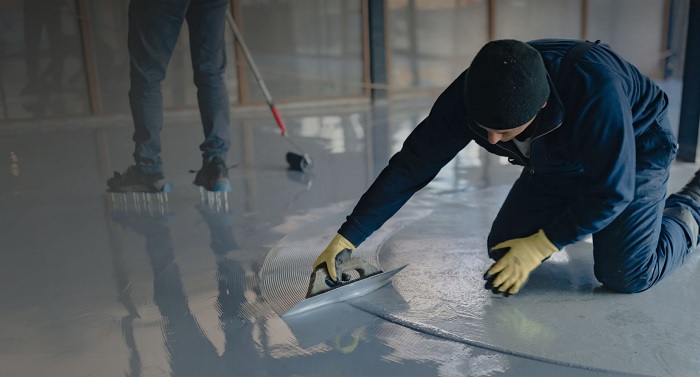
Epoxy is a special resin coating over a concrete surface. It is not a separate floor slab. It is made by combining resin and hardener. When this coating becomes hard, it makes the floor solid, smooth, and durable. In simple words, epoxy flooring turns regular concrete into a stronger and more resistant surface.
Epoxy Flooring vs. Concrete: What is the Difference
Concrete: It is the base material used to construct most industrial floors. It is strong, but porous. This means it absorbs liquids and can crack or chip over time.
Epoxy: It is not a separate floor by itself. It is applied over concrete as a protective layer.
The difference between epoxy flooring and concrete coating is that concrete is the base surface, while epoxy floor coating is a protective layer placed on top to make the floor stronger, sealed, and more durable. Concrete alone can survive heavy weight, but it slowly breaks down. Epoxy seals and protects it from daily damage.
How Long Does Epoxy Flooring Last in an Industrial Setting?
Industrial buildings need floors that can handle serious traffic. So, lifespan matters a lot. When installed properly, epoxy performs very well. Our team of epoxy coating installers uses specialized tools and focuses on surface preparation and the installation process to create a floor that lasts longer.
Epoxy flooring can last 10 to 20 years in an industrial building when installed correctly and maintained properly.
Is Epoxy Flooring Resistant to Chemicals and Oil Spills?
This is one of the most asked questions online. Warehouses and factories often deal with oil leaks, chemical spills, and grease stains. Plain concrete absorbs these liquids. Once soaked in, stains become permanent. That also weakens the surface slowly.
Yes, epoxy flooring is resistant to many chemicals and oil spills because it creates a sealed and non-porous surface that prevents liquids from penetrating the concrete.
Spills stay on the top layer. Cleaning becomes easier. This helps maintain both appearance and strength.
Why Epoxy Flooring Has Become Popular in Industrial Spaces
Enhances Workplace Safety: Safety is always a concern in industrial spaces. Uneven surfaces and dust buildup increase accident risks. Slippery oil patches can cause falls. Epoxy flooring can improve workplace safety in factories by creating a smooth, even surface.
Reduces Dust on the Floor: Concrete may look solid, but it constantly releases fine dust particles as it wears down. This dust spreads across equipment and products. Epoxy flooring reduces dust in industrial facilities because it seals the concrete surface and stops particles from breaking loose.
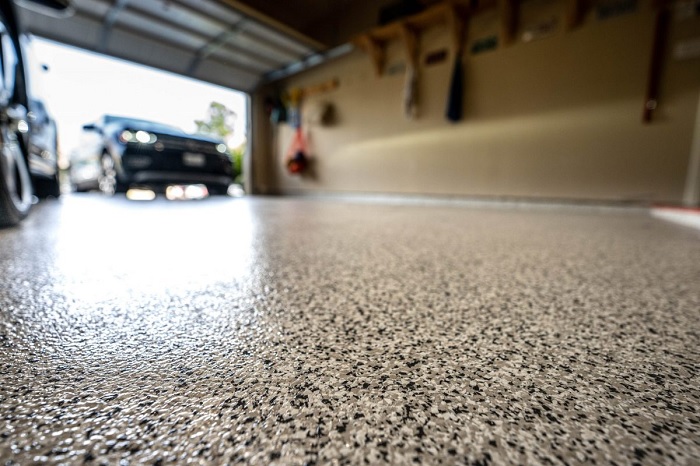
Offers Heavy-Duty Performance: A heavy-duty epoxy floor is designed for industrial pressure. It handles constant traffic, weight impact, and rough use. Not just industrial spaces, homeowners also choose color-flake epoxy flooring to enhance their basement and garage floors.
Improves Long-Term Cost Value: Many property owners think leaving concrete bare saves money. At first, maybe it does. But repairs, cleaning issues, and surface damage add up. Our experts provide attention to detail to apply the coating effectively and keep the floor functional for years with fewer repairs.
If your facility handles heavy traffic, oil spills, or constant movement, industrial epoxy flooring is a practical upgrade. It improves durability, cleanliness, and safety without needing full floor replacement. For industrial property owners like you, it often becomes a long-term solution rather than a temporary fix.
Popular Posts
April 3, 2026
March 10, 2026
February 25, 2026
January 1, 2020
January 1, 2020
January 1, 2020
January 1, 2020
January 1, 2020
January 1, 2020
Post A Comment